
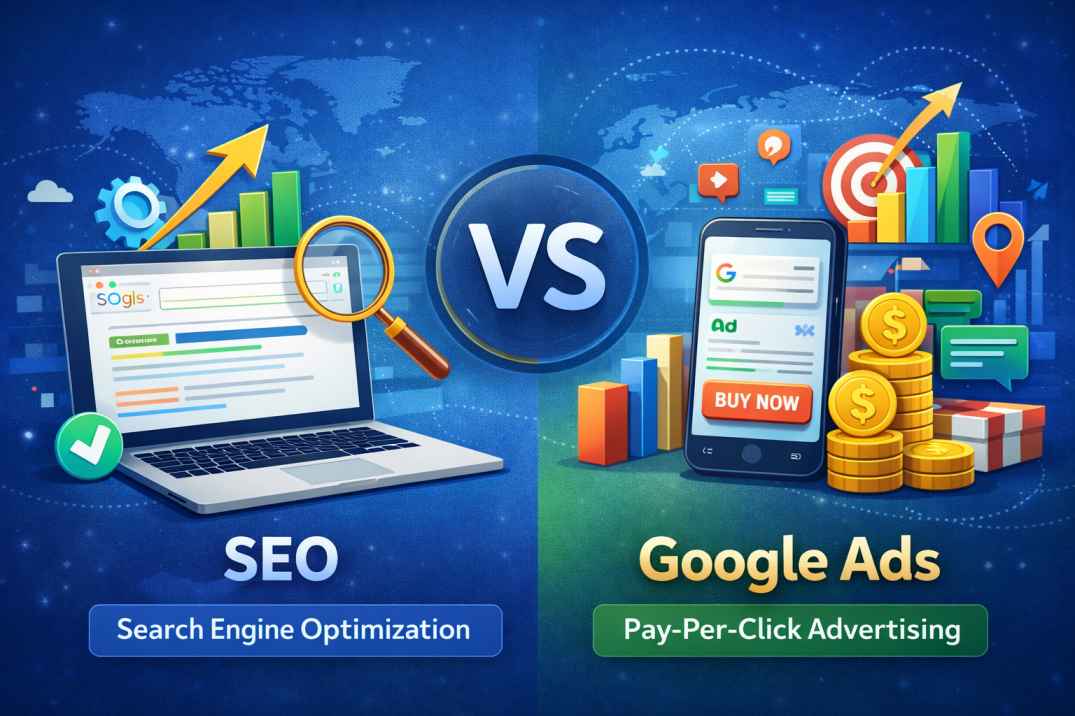
When it comes to growing a business online, two strategies dominate the digital marketing landscape: SEO (Search Engine Optimization) and Google Ads. Both aim to bring traffic to your website, generate leads, and increase sales—but they work in very different ways.
Business owners often ask: SEO vs Google Ads, which is better? The honest answer is not one-size-fits-all. The better option depends on your goals, budget, timeline, and competition. In this article, we’ll break down SEO and Google Ads, compare them side by side, and help you decide which strategy is right for your business.
What Is SEO?
SEO, or Search Engine Optimization, is the process of improving your website so it ranks higher in organic (non-paid) search results on Google. SEO focuses on optimizing content, keywords, technical performance, and backlinks to attract traffic naturally.
SEO does not involve paying Google directly for clicks. Instead, it earns traffic over time by building authority and relevance.
Key Components of SEO:
- Keyword research
- On-page optimization
- Technical SEO
- Content creation
- Link building
SEO is a long-term strategy that delivers consistent and sustainable results.
What Is Google Ads?
Google Ads is a paid advertising platform where businesses bid on keywords to show ads at the top of Google search results, on YouTube, and across partner websites.
Google Ads works on a pay-per-click (PPC) model, meaning you pay only when someone clicks your ad.
Key Features of Google Ads:
- Instant visibility
- Precise audience targeting
- Budget control
- Measurable results
Google Ads is ideal for businesses that want fast traffic and immediate leads.
SEO vs Google Ads: Key Differences
Let’s compare SEO and Google Ads across important factors.
1. Speed of Results
Google Ads wins for speed.
Google Ads can start driving traffic and leads within hours of launching a campaign. This makes it ideal for new businesses, product launches, or time-sensitive offers.
SEO, on the other hand, takes time. It can take weeks or months to see meaningful results, especially in competitive industries.
Verdict:
- Short-term results → Google Ads
- Long-term growth → SEO
2. Cost Comparison
SEO and Google Ads differ significantly in cost structure.
SEO Costs:
- Content creation
- SEO tools
- Technical optimization
- Ongoing maintenance
While SEO requires investment, clicks are free once you rank.
Google Ads Costs:
- Pay for every click
- Costs increase with competition
- Budget stops = traffic stops
SEO has a higher upfront effort but lower long-term cost. Google Ads can become expensive over time if not optimized properly.
Verdict:
- Budget-friendly long-term → SEO
- Flexible short-term spend → Google Ads
3. Sustainability
SEO is more sustainable than Google Ads.
Once your website ranks well, it can continue to attract traffic even if you reduce spending. Google Ads only works as long as you keep paying.
SEO builds a digital asset—your website authority—that grows over time.
Verdict:
SEO is better for sustainable, long-term online presence.
4. Traffic Quality and Intent
Both SEO and Google Ads can deliver high-quality traffic, but in different ways.
Google Ads targets users with immediate intent. If someone searches “hire digital marketing agency,” ads capture buyers ready to convert.
SEO attracts users at various stages—research, comparison, and purchase—making it ideal for content-driven marketing.
Verdict:
- High buyer intent → Google Ads
- Full funnel traffic → SEO
5. Click-Through Rate and Trust
Many users trust organic results more than ads. Organic listings often receive higher credibility because they are “earned,” not paid.
However, ads appear at the very top, giving them maximum visibility.
In competitive searches, businesses often dominate the page using both SEO and ads.
Verdict:
- Trust & credibility → SEO
- Maximum visibility → Google Ads
6. Control and Targeting
Google Ads offers more control.
You can target:
- Specific locations
- Devices
- Time of day
- Age and interests
- Custom audiences
SEO targeting is more indirect and depends on content relevance and search behavior.
Verdict:
Google Ads is better for precise targeting and campaign control.
7. Measurability and Data
Google Ads provides instant, detailed data:
- Cost per click
- Conversion rate
- ROI
- Keyword performance
SEO performance tracking is slower and depends on analytics, rankings, and traffic trends.
Verdict:
Google Ads offers clearer and faster performance insights.
8. Competition Level
In highly competitive industries, SEO can be challenging and time-consuming. Google Ads allows you to compete immediately, even against large brands.
However, high competition also increases ad costs.
SEO requires patience but becomes more cost-effective once rankings are achieved.
Verdict:
- Competitive niches (short-term) → Google Ads
- Competitive niches (long-term) → SEO
SEO vs Google Ads: Which Is Better for Small Businesses?
For small businesses, the choice depends on goals.
- If you need immediate leads → Google Ads
- If you want steady growth with limited budget → SEO
Many small businesses start with Google Ads to generate revenue and invest in SEO for long-term stability.
When Should You Choose SEO?
SEO is better if:
- You want long-term traffic
- You have time to grow organically
- You want to build brand authority
- You aim to reduce dependency on paid ads
SEO works best for blogs, service pages, and informational content.
When Should You Choose Google Ads?
Google Ads is better if:
- You want instant results
- You are launching a new business or product
- You run time-sensitive campaigns
- You want quick ROI tracking
Google Ads is ideal for promotions, local services, and eCommerce sales.
The Best Strategy: SEO + Google Ads Together
The smartest approach is not choosing one over the other—but using both together.
SEO builds long-term organic growth, while Google Ads delivers immediate traffic. Data from Google Ads can also help identify high-performing keywords for SEO.
Businesses that combine SEO and Google Ads often dominate search results and maximize conversions.
Conclusion
So, SEO vs Google Ads—which is better?
There is no single winner. SEO is better for long-term, sustainable growth, while Google Ads is better for fast, targeted results. The right choice depends on your business goals, budget, competition, and timeline.
For best results, businesses should treat SEO and Google Ads as complementary strategies, not competitors. Together, they create a powerful digital marketing engine that drives consistent growth and revenue.
NOTE- if you need any help, hire an expert team of SEO STARTUP to grow your business.
ALSO READ
How to Analyze Keyword Difficulty and Competition
How to Improve SEO Rankings in 2026
Digital Marketing Strategy for Small Businesses
How SEO Trends Can Affect Small Businesses
How to Rank Your Business on Google Maps
Difference Between AdX and Google AdSense